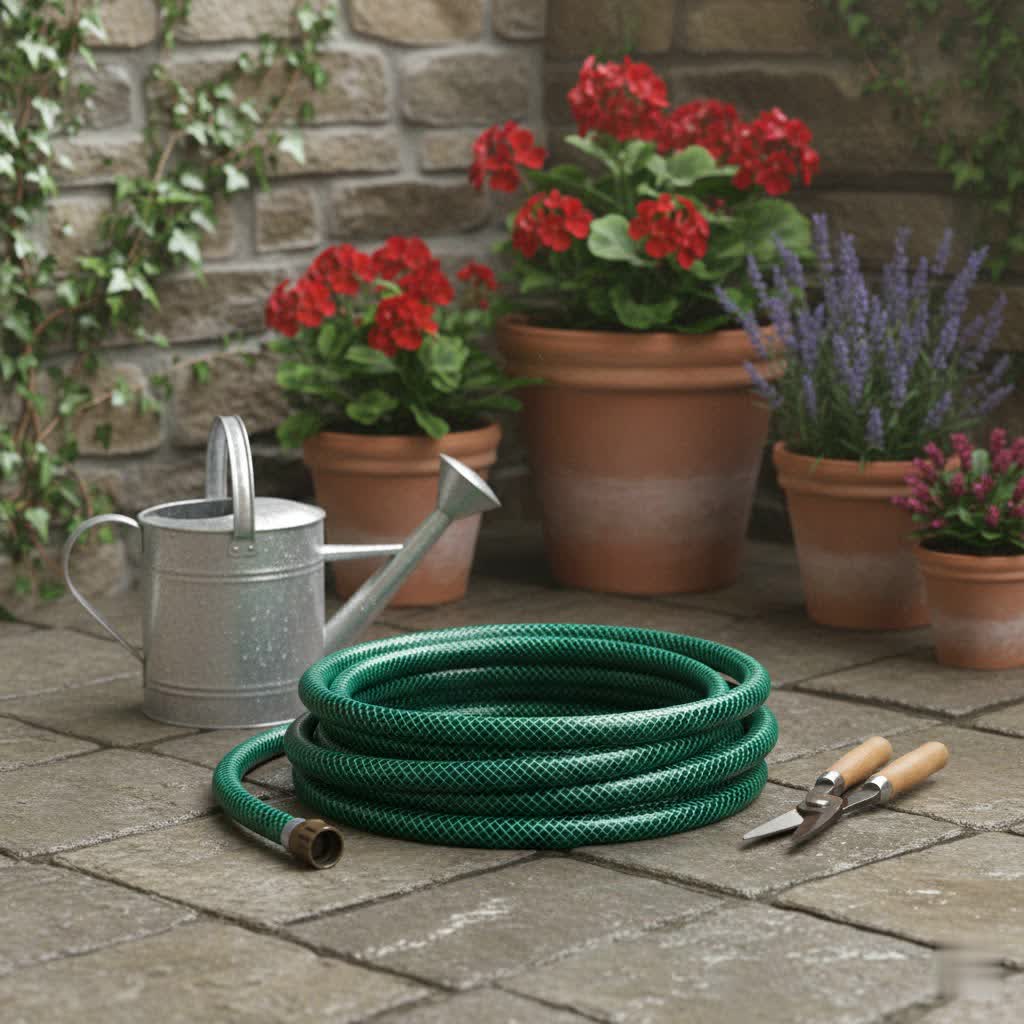
The familiar struggle of wrestling with heavy, tangled garden hoses can quickly turn a peaceful gardening session into a frustrating chore. Imagine a world where your hose magically shrinks for compact storage, never kinks, and feels almost weightless in your hand. This isn’t a gardener’s dream; it’s the reality offered by a well-chosen retractable garden hose. With so many options flooding the market, however, selecting the right one can feel overwhelming. This comprehensive guide aims to demystify retractable garden hoses, providing you with all the essential information to choose, use, and maintain the perfect hose for your outdoor space, transforming your watering routine into an effortless task.
Understanding Retractable Garden Hoses: Types and Materials
Retractable garden hoses are designed for unparalleled convenience, offering a compact solution to traditional, bulky hoses. While the term “retractable” often brings to mind the popular expandable fabric hoses, it can also encompass self-coiling designs. Understanding the nuances of each type and their construction materials is crucial for making an informed decision.
Expandable Hoses
Expandable hoses are the most common interpretation of “retractable” and feature a clever design that allows them to extend significantly when filled with water and contract to a fraction of their size when drained. At their core is a flexible inner tube, typically made from latex or TPE (Thermoplastic Elastomer), which expands under water pressure. This inner tube is encased in a durable outer fabric shell, often made of polyester or nylon, which protects it from abrasions and punctures. The number of latex layers (e.g., double, triple, or even quad-layer) and the denier rating of the outer fabric directly impact the hose’s durability and resistance to bursting or tearing. These hoses are prized for being incredibly lightweight, easy to store, and remarkably resistant to tangles. However, their durability can be a concern if lower-quality materials are used, making them susceptible to punctures or bursts if dragged over sharp surfaces or left under constant high pressure.
Self-Coiling Hoses
Self-coiling hoses offer another form of retraction, characterized by their distinct spiral shape that naturally returns to a compact coil when not in use. Made from polyurethane or similar plastic materials, these hoses are generally lighter than traditional rubber hoses and provide a moderate degree of flexibility. They excel in small spaces or for quick tasks where minimal reach is needed, as their inherent coiled structure keeps them neat without manual winding. While they are simple and efficient for light-duty use, self-coiling hoses can sometimes kink if stretched too far or improperly handled, and their reach might be limited compared to expandable options.
Retractable vs. Traditional Garden Hoses: A Comparison
Deciding between a retractable and a traditional garden hose depends heavily on your specific needs, priorities, and gardening habits. Each type presents a distinct set of advantages and disadvantages that influence performance, convenience, and longevity.
Here’s a detailed comparison to help you weigh your options:
| Feature | Retractable Garden Hose (Expandable) | Traditional Garden Hose (Rubber/Vinyl) |
|---|---|---|
| Weight | Extremely lightweight | Heavy and cumbersome |
| Storage | Shrinks to compact size, easy to store | Bulky, requires reels or extensive space |
| Durability | Varies; good quality is durable, but can be prone to punctures/bursts if low quality | Very durable, resistant to punctures, weather |
| Water Pressure | Can slightly reduce pressure | Maintains strong water pressure |
| Kink Resistance | Highly kink-resistant (when expanded) | Can kink easily, especially if low quality |
| Tangle Resistance | Generally tangle-free | Prone to tangles |
| Ease of Use | Very easy to maneuver and transport | Requires effort to move and coil |
| Cost | Mid to high range, depending on quality | Wide range, from budget to premium |
Retractable hoses, especially the expandable kind, are ideal for gardeners seeking convenience, ease of use, and compact storage. They are perfect for watering small to medium-sized gardens, patios, or for washing cars where a lightweight and tangle-free solution is paramount. In contrast, traditional hoses, with their superior durability and pressure retention, remain the go-to choice for heavy-duty tasks, extensive watering areas, or environments where the hose might endure rough treatment. If you prioritize raw power and long-term resilience above all else, a traditional hose might still be your preferred option.
Essential Buying Guide for Your Retractable Garden Hose
Choosing the right retractable garden hose involves more than just picking a color. A thoughtful approach to your purchase ensures you get a hose that meets your needs, stands the test of time, and makes your gardening life easier.
Determine Your Needs
|
Our Picks for the Best Garden Hose in 2026
As an Amazon Associate I earn from qualifying purchases.
|
||
| Num | Product | Action |
|---|---|---|
| 1 | Nilight RV Water Hose 100FT Garden Drinking Hoses with Storage Bag Leakproof Anti-Kink 5/8" Inner Diameter Flexible Lightweight Freshwater Hose for RVs Campers Travel Trailer Boat Car Wash Accessories |

|
| 2 | Flexi Hose Expandable Garden Hose with 8 Function Nozzle, 100FT - Lightweight Retractable Garden Hose, Water Hose - No-Kink Flexibility, 3/4 Inch Solid Brass Fittings and Double Latex Core |
|
| 3 | Easy to Use Garden Hose 100 FT, Lightweight and Leak-Proof Heavy-Duty Flexible Water Hose 100FT with Reinforced TPE Core, 3/4" Solid Brass Fittings, Ultra-Flow Manguera Para Jardin, Built to Last |
|
| 4 | Flexi Hose Expandable Garden Hose with 8 Function Nozzle, 50FT - Lightweight Retractable Garden Hose, Water Hose - No-Kink Flexibility, 3/4 Inch Solid Brass Fittings and Double Latex Core |
|
| 5 | Flexzilla Garden Hose 5/8 in. x 50 ft., Lightweight All-Weather Water Hose, Durable and Flexible, Leak-Free Connections |
|
| 6 | Flexzilla Garden Hose 5/8 in. x 25 ft., Lightweight All-Weather Water Hose, Durable and Flexible, Leak-Free Connections |
|
| 7 | Flexi Hose Expandable Garden Hose with 8 Function Nozzle, 50FT - Lightweight Retractable Garden Hose, Water Hose - No-Kink Flexibility, 3/4 Inch Solid Brass Fittings and Double Latex Core |
|
| 8 | Amazon Basics - Garden Hose, 100ft |
|
| 9 | YAMATIC 100FT 5/8" Garden Hose, 300 PSI Kink-Resistant Water Hose with 360° Swivel Connector & 3/4" Brass GHT Fittings, Flexible All-Weather Outdoor Hose for Yard, Lawn, Garden & Driveway |
|
| 10 | Flexzilla Garden Hose 5/8 in. x 100 ft., Lightweight All-Weather Water Hose, Durable and Flexible, Leak-Free Connections |
|
Before diving into specifications, consider your specific watering requirements. What is the approximate size of your garden or yard? Do you need to reach distant corners, or will it primarily be used on a patio? What types of plants will you be watering – delicate flowers or thirsty shrubs? Your local water pressure and the frequency of use also play a role. Understanding these factors will help you narrow down the ideal length and quality of hose required.
Material Quality Matters
The longevity of a retractable hose largely depends on its internal core and external fabric. Look for hoses with multi-layer latex cores (e.g., double, triple, or quad-layer) as these offer superior strength, elasticity, and resistance to bursting compared to single-layer latex or basic TPE. The outer fabric should be made from a high-denier polyester or nylon, providing robust protection against abrasions, UV rays, and punctures. A higher denier count indicates a denser, more durable weave, crucial for surviving outdoor conditions.
Hose Length
Retractable hoses are typically advertised by their fully expanded length (e.g., 50ft, 75ft, 100ft). However, it’s important to they contract significantly, often to about a third of their expanded size. Measure the maximum distance you need the hose to reach from your faucet, and then choose a hose length that comfortably exceeds this measurement when fully expanded. Opting for a slightly longer hose than strictly necessary can prevent overstretching, which can reduce its lifespan.
Fittings and Connectors
The fittings at each end of the hose are critical for preventing leaks and ensuring a secure connection to your faucet and nozzle. High-quality brass fittings are generally superior to plastic ones, offering greater durability, resistance to corrosion, and a more secure seal. Look for fittings that are crush-resistant and include an anti-kink collar or a swivel mechanism, which can prevent the hose from twisting at the connection point.
Pressure Resistance
While retractable hoses typically operate well with standard household water pressure, it’s wise to check the hose’s PSI (pounds per square inch) rating. A higher PSI rating indicates the hose can withstand greater pressure before bursting. This is particularly important if you have higher than average water pressure in your home or plan to use pressure-intensive attachments. Ensure that both the inner core and the outer fabric are rated to handle your typical water pressure for optimal safety and longevity.
Ease of Use & Storage
One of the main appeals of retractable hoses is their convenience. Consider the hose’s flexibility and how easily it expands and contracts. Some models boast enhanced flexibility even in colder temperatures. For storage, think about how it will retract – most do so automatically once the water is drained. Many come with storage bags or hooks, simplifying the tidy stowage of your compact hose.
Brand Reputation & Warranty
Investing in a retractable hose from a reputable brand can provide peace of mind regarding quality and customer support. Brands known for their innovative materials, robust construction, and excellent warranties often provide a better long-term value. Check user reviews and the warranty period offered, as a longer warranty often signifies the manufacturer’s confidence in their product’s durability.
Top Retractable Garden Hose Brands Reviewed
The market for retractable garden hoses is robust, with several brands consistently earning high praise for their innovation, durability, and user-friendly designs. Here are some of the top contenders that frequently stand out:
- Flexzilla: While perhaps more famous for its traditional rubber hoses, Flexzilla also offers excellent lightweight and flexible options that can often be considered “retractable” due to their superior maneuverability and ease of coiling. They are renowned for their extreme all-weather flexibility and kink-free performance.
- TheFitLife: This brand is a popular choice for expandable hoses, often featuring multi-layer latex cores and strong polyester fabrics. They are known for providing good value, robust brass fittings, and a focus on preventing leaks and bursts, making them a reliable option for daily use.
- TBI Pro: TBI Pro hoses frequently impress with their heavy-duty construction, often incorporating a 4-layer latex core and a high-strength 3750D polyester fabric. They are designed to withstand high pressure and rough handling, appealing to users seeking maximum durability in an expandable hose.
- Aterod: Aterod expandable hoses are often praised for their strong brass connectors and a reputation for being tangle and kink-free. They focus on delivering a lightweight yet durable watering solution for various gardening tasks.
- Xhose: As one of the original pioneers of the expandable hose concept, Xhose continues to offer a range of products known for their lightweight design and convenient retraction. Their latest models often feature improved materials and fittings to enhance durability.
These brands represent a commitment to quality and innovation in the retractable hose market, providing reliable options for different needs and budgets.
Maximizing Lifespan: Tips for Using and Storing Your Retractable Hose
A retractable garden hose, while convenient, benefits greatly from proper care to ensure its longevity. Following these simple tips can significantly extend the life of your hose, saving you money and frustration in the long run.
Proper Drainage
The most critical step to maximizing the life of your expandable hose is ensuring all water is completely drained after each use. The hose relies on water pressure to expand and contracts when the pressure is released. If water remains inside, it can prevent full retraction, leaving the hose vulnerable to kinks or damage, especially in freezing temperatures. Simply turn off the water faucet, then open the nozzle or sprayer to release all residual water.
Sunlight Exposure
Prolonged exposure to direct sunlight and harsh UV rays can degrade the outer fabric and even the inner latex core of your retractable hose over time. This can lead to brittleness, fading, and a reduction in flexibility. Whenever possible, store your hose in a shaded area or indoors after use, rather than leaving it baking in the sun for extended periods.
Storage Best Practices
Once drained, a retractable hose is incredibly compact and easy to store. Utilize a hose hanger, a decorative pot, or a storage bag to keep it neatly organized and off the ground. During winter months or periods of extended non-use, it’s highly recommended to store the hose indoors in a dry, temperate environment. This protects it from extreme cold, which can cause the inner core to become rigid and crack.
Gentle Handling
Despite their sturdy construction, expandable hoses are not designed for rough treatment. Avoid dragging the hose over sharp rocks, rough concrete edges, or thorny bushes, as these can easily snag or puncture the outer fabric and compromise the inner core. Always pick up and move the hose rather than dragging it unnecessarily.
Water Pressure Management
While modern retractable hoses are built to withstand standard household water pressure, it’s not advisable to leave them under constant high pressure for extended periods when not actively watering. Always turn off the water faucet when you finish using the hose and before storing it. This reduces stress on the hose’s components and minimizes the risk of sudden bursts or leaks.
Common Retractable Hose Problems and Solutions
Even the best retractable garden hoses can encounter issues over time. Understanding common problems and their simple solutions can help you quickly resolve issues and keep your hose functioning effectively.
Leaking or Bursting
Leaks often occur at the connection points between the hose and the faucet or nozzle. First, check that the fittings are securely tightened. If the leak persists, inspect the rubber washers inside the connectors and replace them if they appear worn or damaged. If the hose itself is leaking or has burst, it’s often due to a puncture in the outer fabric that has compromised the inner tube, or due to prolonged exposure to high pressure or sun damage. Small punctures might be repairable with a specialized hose repair kit, but for major bursts, replacement is usually the most practical solution.
Not Retracting Fully
If your retractable hose isn’t shrinking back to its original compact size, the most common culprit is residual water trapped inside. Ensure the water faucet is completely turned off and then activate your nozzle or sprayer until no more water flows out. You might also gently lift and manipulate sections of the hose to help gravity drain any remaining liquid. In some cases, a kink in the hose while draining can trap water, preventing full retraction.
Low Water Pressure
A noticeable drop in water pressure from your retractable hose can be frustrating. First, verify that your outdoor faucet is fully open and that your home’s water pressure is normal. Then, check the hose itself for any visible kinks or twists that might be impeding water flow. Sometimes, debris can get lodged in the nozzle or within the hose fittings, reducing pressure; disconnecting and cleaning these components can often resolve the issue. If the hose is old, the internal structure might have deteriorated, affecting its ability to maintain pressure.
Kinking (Despite “Tangle-Free” Claims)
While marketed as kink-free, some retractable hoses can still kink, especially if they are lower quality or if they are mishandled. Kinking often happens when the hose is not fully drained and retracting, leading to uneven contraction and twists. To prevent this, always drain the hose thoroughly. Also, avoid overstretching the hose beyond its comfortable expanded length, as this can put undue stress on the fabric and core, making it more prone to kinking during retraction.
Conclusion
Embracing a retractable garden hose can truly improve your approach to yard work, offering unparalleled convenience, lightweight maneuverability, and compact storage. By understanding the different types, prioritizing quality materials like multi-layer latex cores and high-denier fabrics, and selecting the right length and fittings, you can make a smart investment that simplifies your watering tasks for years to come. that proper care—including thorough drainage, protection from harsh sunlight, and gentle handling—is key to maximizing its lifespan. While retractable hoses address many of the frustrations associated with traditional models, knowing how to troubleshoot common issues like leaks or incomplete retraction will ensure a smooth, efficient gardening experience. Are you ready to say goodbye to tangled messes and heavy lifting? What’s your biggest garden hose challenge that a retractable hose could solve?
Frequently Asked Questions
Are retractable garden hoses durable?
The durability of retractable garden hoses has significantly improved with advancements in materials. High-quality hoses featuring multi-layer latex cores and robust, high-denier outer fabrics are quite durable and resistant to punctures and bursts, especially with proper care. Avoid cheaper models with thin inner tubes or weak outer shells for better longevity.
How do retractable hoses work?
Retractable hoses, particularly the expandable type, work by utilizing water pressure. When the water faucet is turned on, the inner latex or TPE tube expands rapidly, causing the outer fabric shell to stretch and the hose to lengthen. When the water is turned off and drained, the inner tube naturally contracts, pulling the outer shell back to its original compact size.
Can I leave water in my retractable hose?
It is strongly recommended not to leave water in your retractable hose. Leaving water inside can prevent the hose from fully retracting, lead to kinks, and potentially damage the inner core due to prolonged pressure or freezing temperatures. Always drain the hose completely after each use for optimal performance and lifespan.
What’s the best way to store a retractable garden hose?
The best way to store a retractable garden hose is to drain it completely, then coil it loosely or place it in a designated hose hanger or storage bag. Storing it in a cool, dry, and shaded area, especially indoors during winter, will protect it from UV degradation and extreme temperatures, significantly extending its life.
Are retractable hoses good for high water pressure?
Many modern retractable hoses are designed to handle standard household water pressure effectively. However, consistently very high water pressure can put undue stress on their components. Always check the hose’s PSI rating and avoid leaving it under constant pressure when not in use to prevent premature wear or bursting.
How do I fix a leak in my expandable hose?
For leaks at the connection points, check and tighten fittings or replace worn rubber washers. For small punctures in the hose body, specialized repair kits are available. However, for significant bursts or tears in the inner tube, especially in older or lower-quality hoses, replacement is often the most reliable solution.
Get our weekly buyer guide
Practical specs, not advice. Unsubscribe anytime.

I was so tired of fighting with my old, heavy hose that always kinked. This guide really helped me understand the different types of retractable hoses. I ended up getting one with a hybrid polymer material, and it’s been a game-changer. It’s so light and easy to put away, making watering my flower beds a joy instead of a chore.
This was helpful for understanding the basics. I bought a retractable hose based on some of the material suggestions, but I’m finding the retraction mechanism a bit stiff. It doesn’t always go back as smoothly as I’d like, which can be a little frustrating. Still better than my old hose, though.
Finally, a guide that breaks down the overwhelming options! I appreciated the details on how different materials affect durability and weight. I went with a reinforced rubber retractable hose for my larger yard, and it feels incredibly sturdy. No more wrestling with tangles, which is a huge relief.
Great info here! I’ve been looking for a better solution for my small patio garden. The section on compact storage really resonated with me. I picked up a 50-foot expandable hose, and it’s perfect for my needs. It shrinks down so small, freeing up a lot of space.