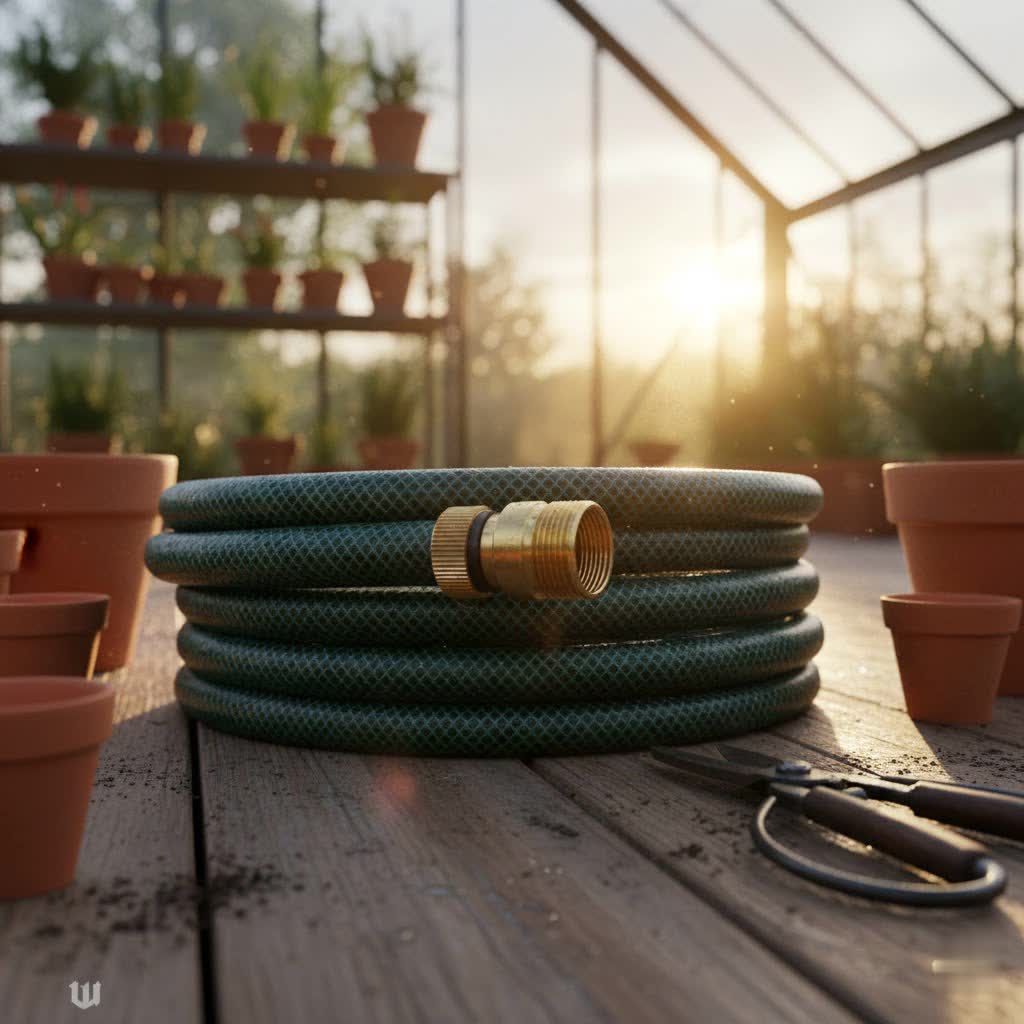
Have you ever wondered how to keep your garden vibrant and healthy without constantly dragging a hose around or seeing precious water go to waste? The secret often lies in smarter irrigation. Drip hoses for the garden have revolutionized how we water our plants, offering a precise, efficient, and sustainable solution to nourish your greenery. This comprehensive guide will walk you through everything you need to know about drip hoses, helping you choose the best system, understand its benefits, and maintain it for a thriving garden year after year.
Understanding the Different Types of Drip Hoses and Irrigation Systems
Navigating the world of garden watering can seem complex with various terms like “drip hose,” “drip line,” and “soaker hose.” While often used interchangeably, understanding their distinctions is key to selecting the perfect system for your garden. For garden hose buying guides on this site.
Drip Emitters (Point-Source Irrigation)
Drip emitters are small, individual devices that connect to a main supply line, delivering water directly to the root zone of specific plants. They are perfect for gardens with scattered plants, individual potted plants, or areas where you need to deliver precise amounts of water to each plant. Emitters come in various flow rates, often color-coded, allowing for customized watering based on a plant’s specific needs. For instance, you might use an emitter that delivers 1 gallon per hour for a small perennial, while a larger shrub might require 2 gallons per hour. While installation might involve more components, the customization it offers is unparalleled.
Dripline (Inline Emitter Tubing)
Dripline, also known as inline emitter tubing or techline, is a hose with emitters pre-installed at set intervals, typically every 6, 12, 18, or 24 inches. This type of hose is ideal for watering in rows, such as vegetable beds, hedges, or densely planted areas where uniform coverage is desired. The integrated emitters ensure consistent water distribution along the entire length of the line, making installation simpler than setting up individual emitters for each plant in a row. Dripline is highly efficient, providing even moisture to closely spaced plants without the need for manual adjustments.
Drip Tape
Drip tape is a thinner-walled version of dripline, generally used for larger agricultural applications but also suitable for extensive garden rows. It’s often more economical for large-scale planting but is typically less durable and has a shorter lifespan than standard dripline. Due to its delicate nature, careful installation and handling are required to prevent damage.
Soaker Hoses (A Distinct Watering Method)
|
Our Picks for the Best Garden Hose in 2026
As an Amazon Associate I earn from qualifying purchases.
|
||
| Num | Product | Action |
|---|---|---|
| 1 | Flexzilla Garden Hose 5/8 in. x 100 ft., Lightweight All-Weather Water Hose, Durable and Flexible, Leak-Free Connections |

|
| 2 | Nilight RV Water Hose 100FT Garden Drinking Hoses with Storage Bag Leakproof Anti-Kink 5/8" Inner Diameter Flexible Lightweight Freshwater Hose for RVs Campers Travel Trailer Boat Car Wash Accessories |
|
| 3 | YAMATIC 100FT 5/8" Garden Hose, 300 PSI Kink-Resistant Water Hose with 360° Swivel Connector & 3/4" Brass GHT Fittings, Flexible All-Weather Outdoor Hose for Yard, Lawn, Garden & Driveway |
|
| 4 | Flexi Hose Expandable Garden Hose with 8 Function Nozzle, 50FT - Lightweight Retractable Garden Hose, Water Hose - No-Kink Flexibility, 3/4 Inch Solid Brass Fittings and Double Latex Core |
|
| 5 | Flexi Hose Expandable Garden Hose with 8 Function Nozzle, 100FT - Lightweight Retractable Garden Hose, Water Hose - No-Kink Flexibility, 3/4 Inch Solid Brass Fittings and Double Latex Core |
|
| 6 | Flexi Hose Expandable Garden Hose with 8 Function Nozzle, 50FT - Lightweight Retractable Garden Hose, Water Hose - No-Kink Flexibility, 3/4 Inch Solid Brass Fittings and Double Latex Core |
|
| 7 | Flexzilla Garden Hose 5/8 in. x 25 ft., Lightweight All-Weather Water Hose, Durable and Flexible, Leak-Free Connections |
|
| 8 | Amazon Basics - Garden Hose, 100ft |
|
| 9 | Flexzilla Garden Hose 5/8 in. x 50 ft., Lightweight All-Weather Water Hose, Durable and Flexible, Leak-Free Connections |
|
| 10 | Easy to Use Garden Hose 100 FT, Lightweight and Leak-Proof Heavy-Duty Flexible Water Hose 100FT with Reinforced TPE Core, 3/4" Solid Brass Fittings, Ultra-Flow Manguera Para Jardin, Built to Last |
|
While often categorized under “low-flow irrigation,” soaker hoses operate differently from drip hoses. Made from porous materials, soaker hoses “weep” water along their entire length, allowing it to seep into the soil. They are generally simpler to install and are a good option for small, level garden beds or uniform rows. However, soaker hoses offer less precision, an unregulated water flow, and are not ideal for sloped terrain due to uneven water distribution. They are also more prone to clogging from sediment and can be less durable than dedicated drip irrigation systems.
Comparison Table: Drip Hoses vs. Soaker Hoses
To help you decide, here’s a direct comparison between drip hose systems and soaker hoses:
| Feature | Drip Hoses (Emitters/Dripline) | Soaker Hoses |
|---|---|---|
| Water Delivery | Targeted, precise drips via emitters | Seepage along entire porous length |
| Efficiency | Highly efficient (up to 80% water saving) | Less efficient than drip, more than sprinklers |
| Precision | Excellent, customizable to individual plants | Lower, waters a broader, less controlled area |
| Terrain | Suitable for flat or sloped gardens (pressure regulation) | Best for level ground |
| Durability | Very durable (10-15 years), repairable | Moderate, shorter lifespan, harder to repair |
| Installation | More complex initial setup, highly customizable | Simpler, quicker setup |
| Cost | Higher upfront investment, lower long-term operating | Lower upfront cost, potentially higher replacement |
| Maintenance | Requires cleaning emitters, checking for clogs/leaks | Prone to clogging, needs flushing |
| Best Use | Rows, individual plants, containers, varied landscapes | Small beds, hedges, uniform rows on flat ground |
How to Choose the Best Drip Hose for Your Garden
Selecting the right drip hose system involves considering several factors unique to your garden and gardening style.
Assess Your Garden’s Needs
- Size & Layout: Measure your garden’s dimensions. For runs under 200 feet in typical backyard settings, 1/2-inch tubing is often sufficient. Larger gardens or longer runs (over 200 feet, or several hundred feet) may benefit from 3/4-inch or even 1-inch mainline tubing to prevent pressure loss and ensure consistent water flow. For individual plants or small areas, 1/4-inch micro tubing is ideal.
- Plant Types & Spacing: The type of plants you grow and how densely they are spaced will dictate the best emitter spacing. For herbs, lettuce, or compact garden beds, 6- to 9-inch emitter spacing works well. Vegetables and flowers typically thrive with 12-inch spacing, while larger plants like shrubs and perennials might need 18- to 24-inch spacing. For trees or widely spaced plants, consider 36- to 48-inch spacing or individual drip emitters.
- Water Pressure & Flow Rate: Consistent water pressure is crucial for an effective drip system. If your home’s water pressure is too high, a pressure regulator is essential to prevent damage to the system and ensure even watering. Some smaller drip lines, especially 1/4-inch ones, require a minimum of 5 PSI to function correctly.
- Terrain: Drip irrigation systems are versatile and can be used on both flat ground and slopes. For sloped areas, pressure-compensating emitters are highly recommended to ensure uniform water delivery regardless of elevation changes.
Consider Material Quality and Durability
Most drip irrigation tubing is made from polyethylene, known for its longevity and resistance to UV damage. While some soaker hoses use recycled rubber, which may not be ideal for food crops, high-quality polyethylene tubing is generally safe and durable. Investing in UV-resistant materials will prolong the life of your system, especially if it’s exposed to direct sunlight. Drip lines are designed for years of use, often lasting 10 to 15 years with proper care.
Ease of Installation and Maintenance
While the initial setup of a drip irrigation system may require some planning, many kits come with clear instructions and all necessary connectors, making it a manageable DIY project. Look for systems that allow for easy expansion or customization. Regular maintenance, such as flushing lines and checking for clogs, is simpler with well-designed components. Soaker hoses generally offer quicker initial installation but can be harder to repair if damaged.
Budget and Long-term Value
Drip irrigation systems typically have a higher upfront cost compared to traditional watering methods or soaker hoses. However, the significant water savings (up to 80% compared to traditional sprinklers), reduced weed growth, and healthier plants often lead to considerable long-term savings on water bills and plant replacement, making it a worthwhile investment.
Top Drip Hose Brands and Systems
When it comes to reputable brands, several names stand out for their quality and reliability in drip irrigation components:
- DripDepot & DripWorks: These companies are frequently recommended by experienced gardeners for their high-quality, agricultural-grade products. They offer a wide range of components, complete kits, and valuable resources, including design guides, to help you plan and install your system effectively.
- Rain Bird & DIG: Widely available at home improvement stores, Rain Bird and DIG offer accessible and generally reliable drip irrigation components suitable for most home gardens. They provide a good starting point for those new to drip irrigation.
- Other brands like Gardena, Element, Flexon, and H2O Works often produce excellent general garden hoses, but for dedicated drip irrigation systems, focusing on specialists like DripDepot or DripWorks can ensure access to more specialized components and expertise.
Tips for Using and Maintaining Your Drip Hose System
Maximizing the effectiveness and lifespan of your drip hose system requires a few simple practices.
- Proper Installation: Lay out your drip lines carefully, avoiding sharp bends or kinks that can restrict water flow. Use appropriate fittings and connectors to ensure a leak-free system. Burying lines under mulch can protect them from UV degradation and physical damage.
- Pressure Regulation: Always use a pressure regulator at the water source to maintain consistent pressure throughout your system. This prevents blowouts and ensures all emitters deliver water uniformly.
- Water Filtration: Sediment and debris in your water can clog emitters. Install a filter at the head of your system and clean it regularly to prevent blockages.
- Regular Inspection: Periodically walk your garden to check for leaks, damaged tubing (from pests, garden tools, or general wear), or clogged emitters. Promptly repair any issues to maintain efficiency.
- Seasonal Care: In regions with freezing winters, drain your system before the first frost to prevent pipes from cracking. Store components in a dry, protected area. In warmer climates, a regular flushing can help clear any mineral buildup.
- Automation: Install an automatic timer to schedule watering. This ensures your plants receive consistent moisture, even when you’re away, and further conserves water by watering during optimal times (early morning or late evening) when evaporation is minimal.
- Mulching: Applying a layer of mulch over your drip lines helps reduce water evaporation from the soil surface, protects the tubing from sun exposure, and suppresses weed growth.
Common Problems and How to Fix Them
Even the best drip irrigation systems can encounter issues. Here’s how to troubleshoot common problems:
- Leaks: Loose connections are a frequent culprit. Tighten fittings or replace worn-out connectors. If a line is cut or punctured, use a splicing connector to repair the damaged section.
- Clogging: Sediment, algae, or mineral buildup (from hard water) are the main causes. Ensure you have a functioning filter and clean it regularly. Periodically flush your lines by removing end caps and letting water run through at full pressure. For buried lines, use anti-siphon emitters to prevent root intrusion.
- Uneven Watering or Low Pressure: This can stem from too small a tubing diameter for a long run, clogged emitters, or insufficient initial water pressure. Verify your tubing size matches your garden’s needs. Clean all emitters. If pressure is consistently low, consider adding a booster pump or splitting your garden into multiple watering zones.
- Kinks and Twists: Improper layout during installation is often the cause. Take care to lay hoses smoothly. If kinks persist, you might need to reroute sections or use a more flexible, kink-resistant tubing. Stakes can help hold lines in place.
Conclusion
Choosing the right drip hose for your garden is a fundamental step towards creating a more sustainable, efficient, and thriving outdoor space. By delivering water directly to where plants need it most, drip irrigation systems conserve precious resources, reduce weed growth, and promote healthier plant development. While the initial setup might require some thought, the long-term benefits in water savings, reduced effort, and vibrant plant life are immeasurable.
Armed with this knowledge, you can confidently select the ideal drip hose system, install it correctly, and maintain it for years of bountiful harvests and beautiful blooms. Ready to transform your garden’s watering routine?
Frequently Asked Questions
What is the difference between a drip hose and a soaker hose?
A drip hose system delivers water through individual emitters at specific points, offering precise and targeted watering. A soaker hose, conversely, has a porous surface that allows water to seep out along its entire length, providing a broader, less controlled saturation. Drip hoses are generally more water-efficient and versatile for various terrains.
Can I use a drip hose on sloped ground?
Yes, drip hoses are suitable for sloped ground, especially when equipped with pressure-compensating (PC) emitters. These emitters ensure that all plants receive a uniform amount of water, regardless of changes in elevation, preventing over or under-watering.
How long should I run my drip irrigation system?
The ideal run time depends on factors like soil type, plant needs, emitter flow rate, and weather. A good starting point is to run the system until the soil around your plants is moist to a depth of 6-12 inches. Consider performing a “can test” to measure water output over time and adjust schedules accordingly, often opting for longer, less frequent watering sessions.
What pressure do I need for a drip irrigation system?
Most drip irrigation systems operate efficiently at low pressure, typically between 10 to 30 PSI. A pressure regulator is crucial to reduce standard household water pressure (which can be 40-80 PSI or higher) to the ideal range for drip components, preventing damage and ensuring even water distribution.
How do I prevent my drip hose from clogging?
To prevent clogging, install a filter at the beginning of your drip system to catch sediment and debris. Regularly clean the filter and periodically flush your drip lines by removing the end caps and running water through them. For hard water areas, occasional flushing with a mild acid solution (like vinegar) can help dissolve mineral buildup.
Can drip hoses be buried?
Yes, many drip hoses and driplines can be buried underground. Burying them offers protection from UV damage, physical harm, and makes the system less visible. When burying, it’s important to use anti-siphon or root-resistant emitters to prevent roots from growing into and clogging the emitters.
What are the best materials for drip irrigation tubing?
The most common and recommended material for drip irrigation tubing is polyethylene. It’s durable, flexible, resistant to UV degradation, and can withstand various weather conditions. Vinyl tubing is also available, particularly for micro tubing, and offers good flexibility.
Get our weekly buyer guide
Practical specs, not advice. Unsubscribe anytime.
